by Who Decides, What Matters | Series 4 | Oct 8, 2026
Consumer demand alone does not make a capital investment viable given a constrained physician supply. Leadership also needs confidence that enough physicians will work with or align with the proposed Women’s and Infants Center. Building on MII’s research into what matters to expectant mothers, this study used behavioral experiments to identify the factors that drive physicians’ contract decisions. By linking consumer demand, physician supply, and incremental deliveries, leadership gained evidence to evaluate the investment—and test the future before committing capital.
by Who Decides, What Matters | Series Topic 3 | Aug 28, 2026
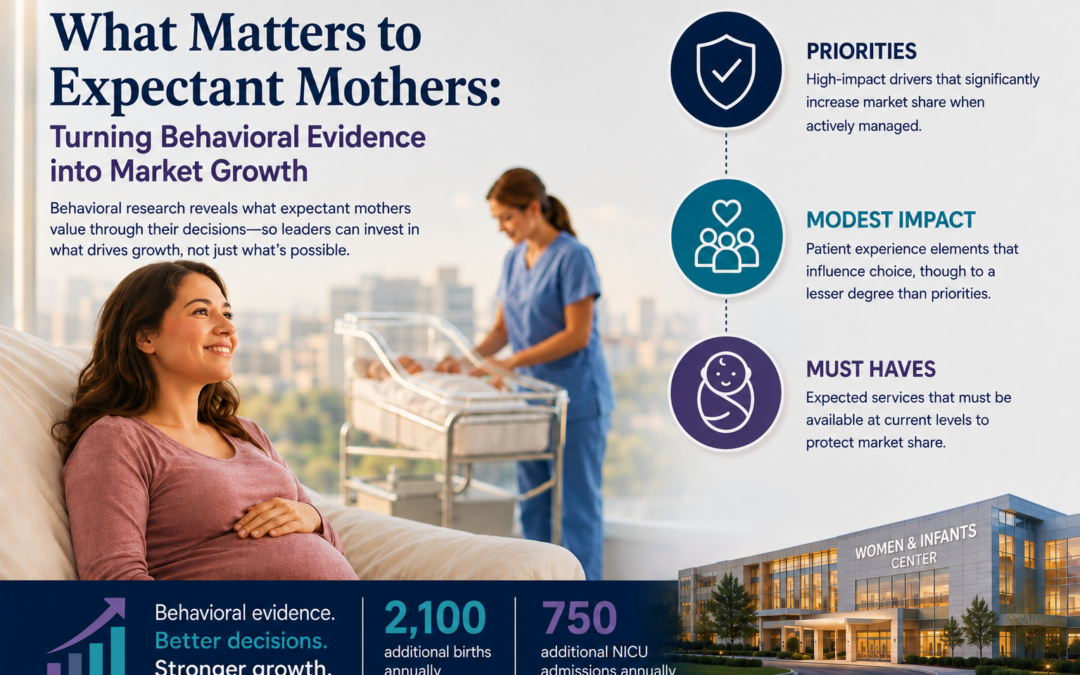
A major Women & Infants Tower faced repeated delays because the Board needed evidence that it could generate enough incremental deliveries to justify hundreds of millions of dollars in investment. Historical utilization data showed where women had delivered—not what would make them switch. The critical question was simple: What matters most to expectant mothers when choosing where to deliver?
by Who Decides, What Matters | Series Topic 2 | Jul 31, 2026
After two decades of stalled advocacy, behavioral decision intelligence helped healthcare executives transform a high-risk capital proposal into an evidence-based Board decision.
by Who Decides, What Matters | Series Topic 1 | Jul 10, 2026
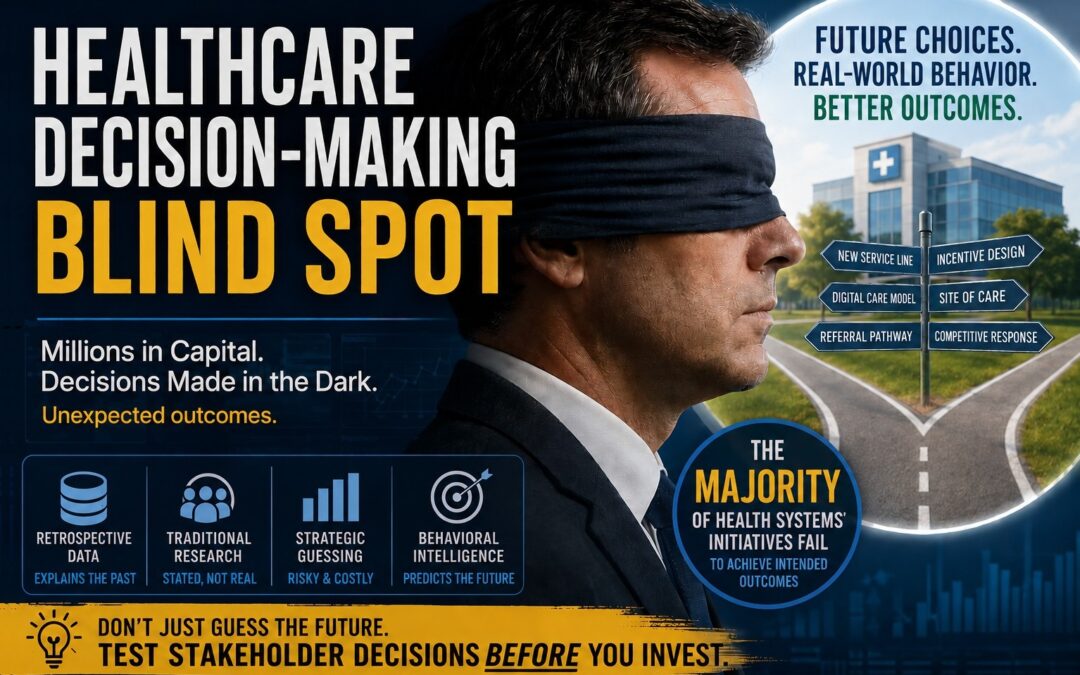
Why do so many healthcare growth initiatives fail despite extensive planning and sophisticated analytics? The answer may lie in a hidden strategic blind spot.
by Stephen Kutner | Feb 13, 2020
More critical than ever, MII writes “A CFO’s Guide to Telehealth and Virtual Visits” to provide a comprehensive analysis of the evolving nature of virtual health and telehealth capabilities. This article discusses how to successfully invest in the future of telehealth and how it will result in long-term, higher quality and more affordable care.