
What Matters to Physicians When Capital Investment Depends on Future Physician Supply

What Matters to Physicians When Capital Investment Depends on Future Physician Supply
In the recent Newsworthy article, "What Matters to Expectant Mothers: Turning Behavioral Evidence into Market Growth.", we presented findings that answered the question of what mattered to consumers. Specifically, the article examined how expectant mothers choose where to deliver. In the context of a substantial capital investment, the next question was: Could the organization recruit additional obstetricians to support the projected incremental volume?
The proposed center would combine the expertise of a world-class obstetrics service with full-spectrum pediatric subspecialty care. However, projected demand alone was insufficient to justify a major capital investment. Leadership needed evidence that they could attract enough obstetricians to support the business case—either through employment or voluntary alignment.
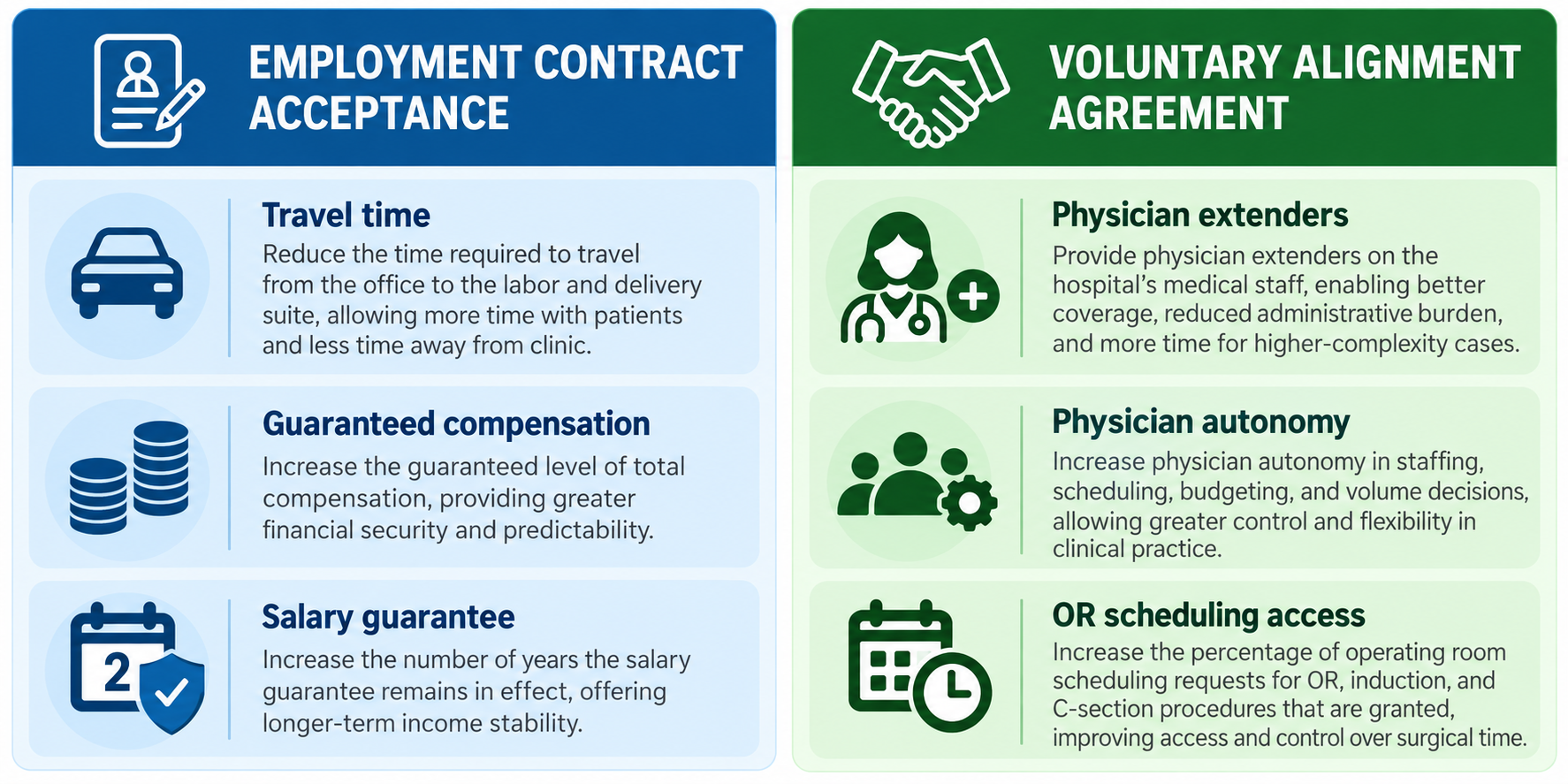
Rather than relying on historical recruitment patterns or stated intentions, which proved inadequate for predicting obstetricians’ interest in the new business model, MII designed two behavioral experiments to identify the drivers of obstetricians' decisions. The two physician segments we tested were: (1) physicians employed by the center and (2) aligned physicians who had privileges at the center.
Forty-two obstetricians participated in the employment contract acceptance experiment, and 48 in the voluntary alignment agreement experiment (both models were statistically significant). Ten features were tested in the employment model and seven in the alignment model. The results presented in the graphic show the specific priority drivers for the hospital physician employment contract sample and the voluntary alignment agreement sample.
The results identified specific priority drivers for each physician segment/group
From What Matters to What Changes Behavior
The behavioral research went beyond identifying what physicians said they valued. It quantified how changes to the proposed offers could affect the likelihood of acceptance. Among the scenario simulations tested, the following illustrative results are presented for the employment contract and the voluntary alignment scenarios.
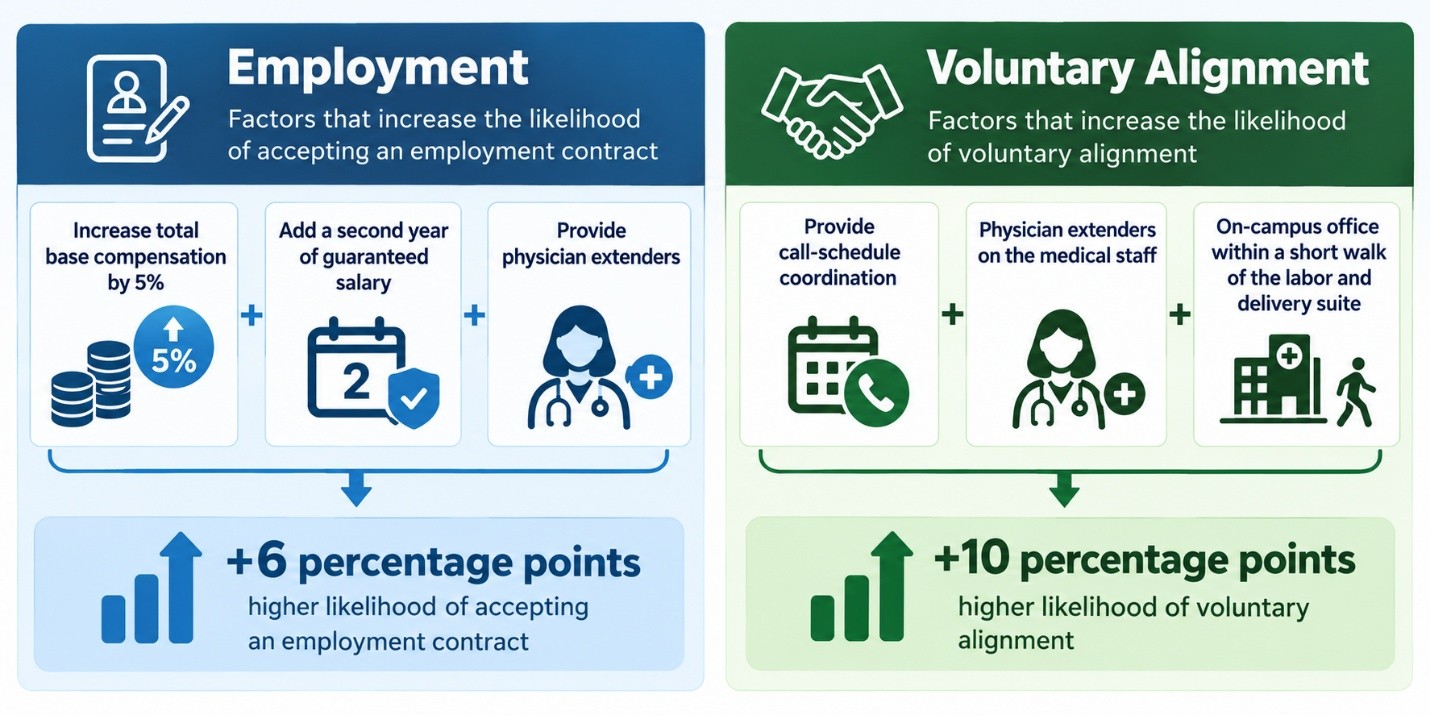
These findings gave leadership what historical data could not: a way to assess how specific investment and contract decisions are likely to influence behavior before committing capital.
What Ultimately Mattered: Connecting Demand, Physician Supply, and Capital Investment
The consumer demand (expectant mothers’) study quantified the potential for incremental deliveries. The physician supply (obstetricians') study identified what matters to physicians when deciding whether to work with or align with the organization and quantified how changes to the employment and alignment agreements could affect participation.
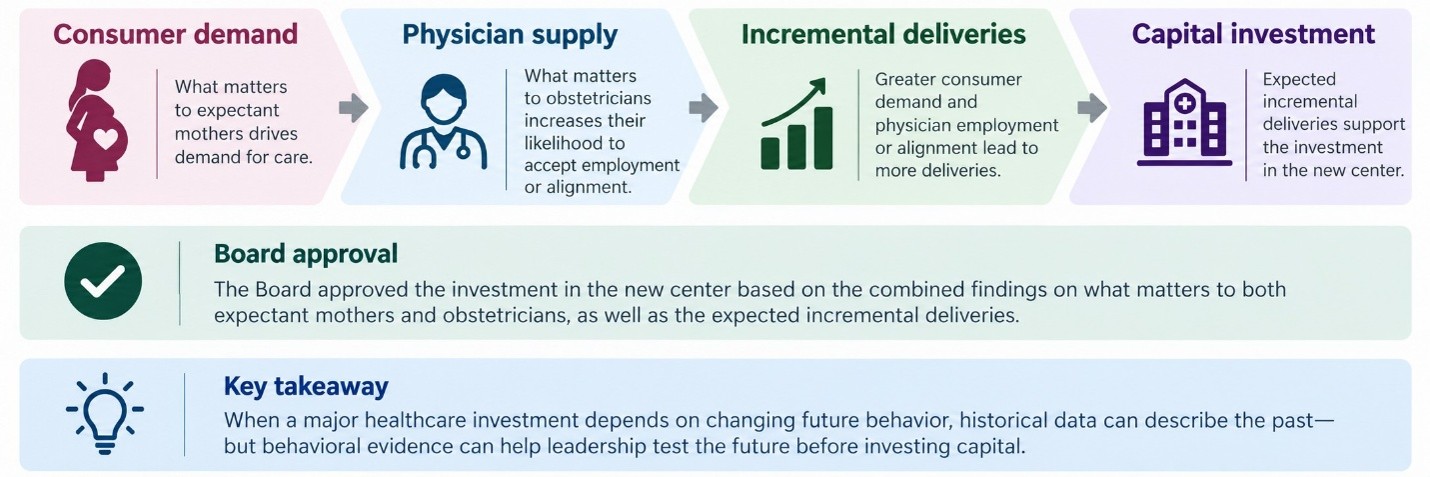
The combined impact of the two studies changed the nature of the Board's decision. The proposed center was no longer supported solely by historical utilization, financial projections, or assumptions about physician participation. Leadership had behavioral evidence showing what mattered to the people who would determine whether the center could succeed—and how changes to the proposed features could influence their decisions.
Learning extends beyond this center: when a major healthcare investment depends on changing future behavior, historical data can describe the past—but behavioral evidence can help leadership test the future before investing capital.
_________________________________________________________________________________
Mi4Sight® is Market Innovations, Inc.’s behavioral economics modeling solution. Built on more than 20 years of experience and 135 healthcare studies, it helps leaders test innovative hypotheses, quantify likely behavior, and evaluate investments before committing capital.
To learn more, visit Mi4sight | Market Innovations Inc.