
Outpatient Imaging Growth Strategy
Case Study Key Business Question:
Would reducing prices for high-volume outpatient imaging services drive sufficient incremental volume to maintain or improve net patient service revenue?
Client Situation
A leading academic medical center sought to strengthen performance in high-volume outpatient imaging services (MRI, CT, ultrasound, X-ray). Despite a strong clinical reputation and advanced diagnostic capabilities, the organization captured approximately 25% market share in selecting outpatient imaging procedures.
Competitive benchmarking suggested that hospital-based imaging prices exceeded those of freestanding imaging centers and regional competitors. At the same time, payer benefit plans, including tiered co-pays, narrow networks, and high-deductible plans—were increasing patient sensitivity to price and access. Hospital leadership considered whether price reductions were required to defend and grow outpatient imaging volume, but needed a rigorous assessment of market behavior to understand the financial implications of alternative strategies.
SIM² Approach
Mi4Sight™ SIM² applied behavioral market simulations to quantify how patients and referring physicians trade off price and non-price attributes when selecting outpatient imaging services. The analysis included:
- Interactive, web-based choice simulations replicating real-world imaging selection and referral decisions
- Evaluation of alternative competitive scenarios incorporating price, access, scheduling convenience, location, turnaround time for results, and communication
- Bayesian demand modeling to estimate price elasticity, volume response, revenue sensitivity, and downside risk
This approach enabled leadership to evaluate strategic options before committing pricing or operational resources.
Key Findings
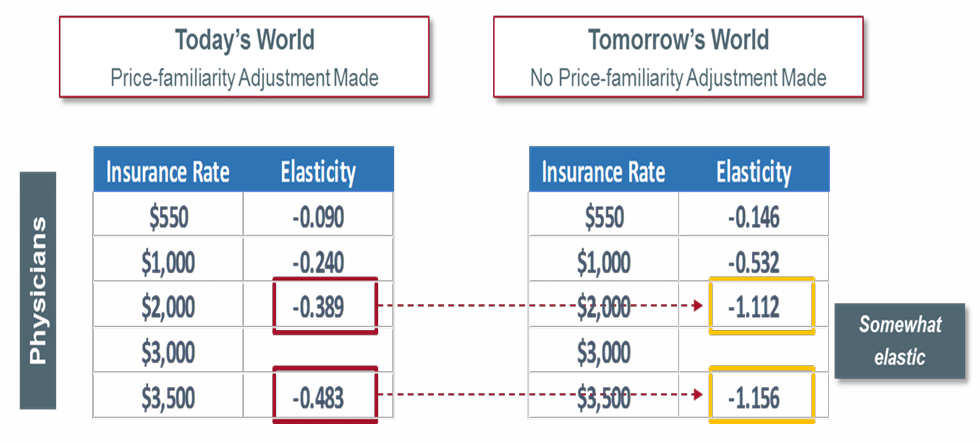
- Outpatient imaging demand was moderately inelastic across tested price ranges
- Simulated price reductions produced limited incremental volume that did not offset revenue loss
- Non-price drivers, particularly ease of scheduling, convenience, and speed of results, had a greater influence on utilization than price
High Volume Outpatient Imaging Price Elasticity
Recommendations
Based on SIM² findings, MII recommended that the hospital:
- Maintain current pricing for targeted outpatient imaging services
- Avoid broad price reductions that would erode net patient service revenue
- Prioritize high-impact service and process improvements aligned with key demand drivers to sustain and support current pricing levels